
CRPS/PAIN 2021
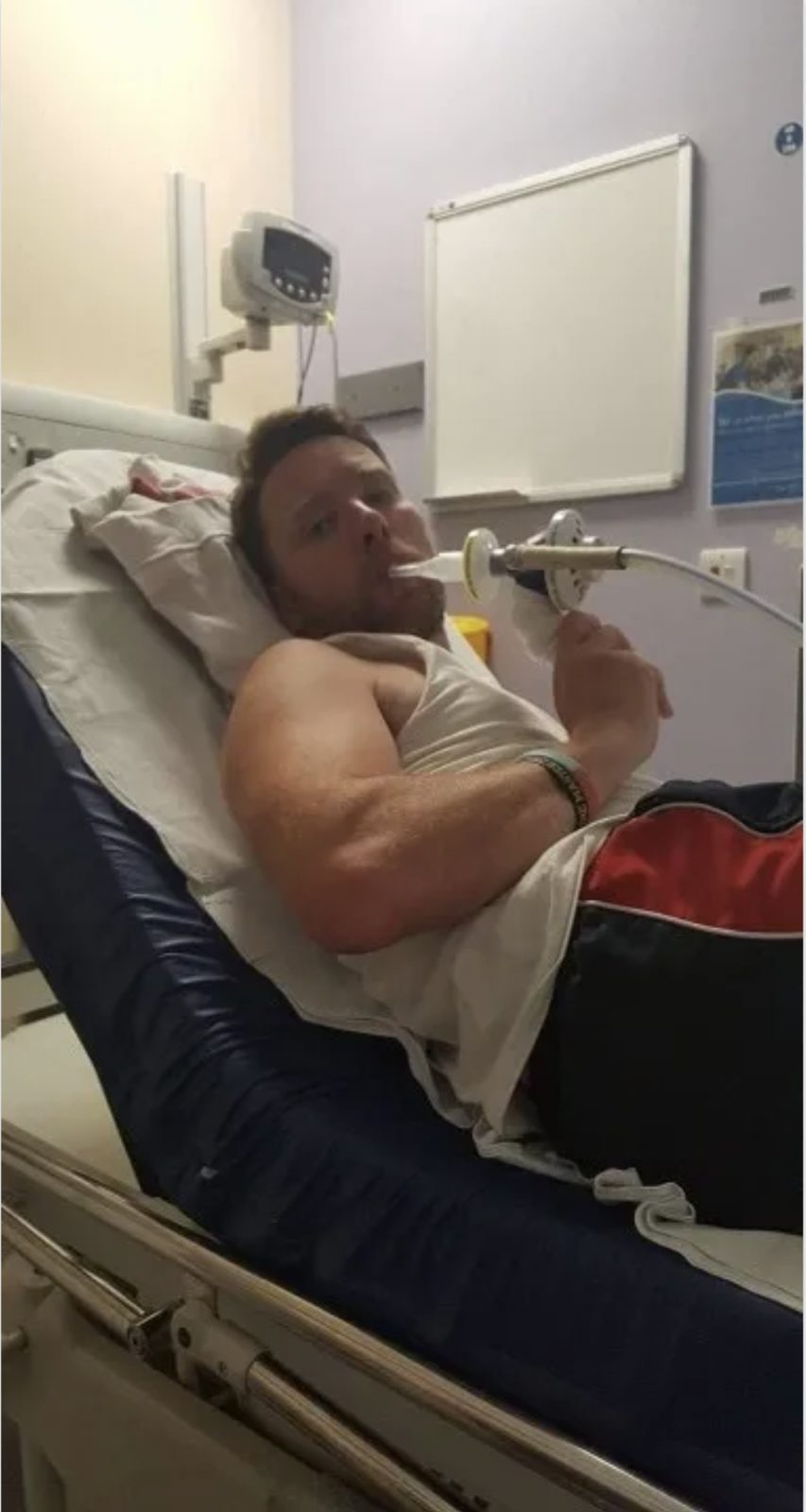
It’s late at night, and I’m sitting on a wooden chair that looks as though it could have come from any typical country kitchen. A flat-screen TV is playing a cartoon that definitely isn’t suitable for children. The house looks no different from your typical two-up, two-down council house: Tired magnolia-coloured walls and a few pictures of a family being forced to smile for the camera. Right now, there is no smile on my face. I’m in a world of hurt. I am being tortured! A hot poker is being driven through the back of my thigh every 30 seconds or so. I scream for the pain to stop, but it doesn’t. Like clockwork, it begins again. Tears roll down my cheeks because I know there is nothing I can do. No amount of begging or pleading will make it stop. I’m sitting here sweating as though I’ve run the 100 metres in under nine seconds, my clothes soaked as if I’ve just stepped out of a sauna. But I couldn’t care less about myself—not until the excruciating pain stops. My mind isn’t on me. It’s on my torturer and what will happen next.
I am, of course, talking about nerve pain, which has tortured me on and off since the day of my injury 19 years ago. Some people call it Complex Regional Pain Syndrome (CRPS). Me, I just call it pain.
The pain comes from an incident in 2007, when I was shot through the spine by a 7.62mm AK round. The bullet struck the bottom of my Kevlar, breaking it apart on impact and turning it into shrapnel that became embedded in my spine. The specialists believe the nerves touch the fragments, causing shooting pain anywhere from the waist down. I never know when it will strike or where. I only know that it will come. It is always a question of when not if. I am completely at the mercy of my torturer.
There is no known cure for pain. There are, however, ways to manage it and adapt your life around what suits you. It involves a lot of compromise, but when you find a way of coping—a strategy that works for you—stick with it and be prepared to make minor tweaks here and there. What works for me starts with research: understanding what kind of pain you have, what causes it and what triggers it. Work out what can help suppress it, such as distraction alongside medication. You must understand that pain medication is not a cure. I stress; pain medication is not a cure. It only brings the pain down to a more tolerable level. It took me quite a few years to understand my pain fully: what triggered it, what made it worse and, more importantly, how I could fight it and bring it down to a level where I could still function throughout the day.
When the pain does strike, it strikes with complete vengeance and without warning. There have been times when it has been so painful that I have wanted to take drastic measures to take the pain away and I’m sure I am not alone there.
I am being tortured again, and it feels as though my legs are being electrocuted. This has been happening for three days straight, and the drugs I’m taking have no effect on the pain. I have spent most of the night in the foetal position, crying into a pillow. The dark thoughts roll in like storm clouds on a summer’s day. The idea of cutting off the limb causing the pain crashes into my head like a claymore to the face. Is it really that simple: cutting off the leg and the pain disappears?
In my mind, I look down at my leg, and beside it lies a kitchen knife, the kind used for cutting meat. It is razor-sharp, more than capable of completing the task I have in mind. I picture myself picking it up and resting the blade on my thigh. I take a few deep breaths, trying to summon the courage, and pressing down hard. The blade breaks the skin and drives deeper. Blood runs down my leg and pools at my feet. There is so much of it—far more than I expected. Still, the thought keeps going, fed by the desperate belief that I must get rid of the pain. That is the only goal: to be pain-free. If the leg were gone, surely the pain would stop. It has to stop. Right?
I am halfway through when I feel something hard in my leg. It must be my femur. Getting past the bone will take everything I have, but once I am through, I will be home and dry. I picture myself forcing the blade onwards with the weight of everything the pain has taken from me. I feel, more than hear, the bone give way as the knife passes into soft tissue and muscle once again. From there, the rest seems almost easy. Once the leg is gone, the pain will stop… except it won’t. The pain is real, but its source is in my head. If I cut off the leg, it will return as phantom pain. It will never be cured that way. But, of course, I haven’t amputated my leg. None of this has happened. It is all in my head: a desperate fantasy born from relentless pain. Sometimes I wish I could remove the source and end it for good, but pain doesn’t work like that. Pain is unforgiving. Pain in my daily companion.
They say prevention is better than cure, and I stand by that. However, you still need a pain-management plan for when the pain strikes—and it will. It’s inevitable. Over the years, I have learnt that whenever I develop an infection, whether it is a urinary tract infection, influenza, COVID or even food poisoning, my body warns me through nerve pain, often before I develop a high temperature. That is why understanding your body matters. Listen to it and learn what it is trying to tell you. To limit the risk, I take precautions whenever I go out in public. I carry alcohol gel everywhere. I avoid touching things unless I have to, especially bathroom doors and toilets, and use the gel afterwards. Shaking hands is natural, and I meet a lot of people through my job, so I must be careful and sanitise my hands after every greeting. I also avoid crowded places whenever possible; when I cannot, I wear a face mask. Yes, I may look stupid now that the COVID era is over, but I cannot risk becoming ill, because illness drives the nerve pain to a level that can put me in hospital on intravenous antibiotics. For me, prevention is not simply better than cure—it is the barrier between control and agony.
So, what do I use to combat the nerve pain when it strikes? I have my trusty drugs, and the main one I take is Shortec, more commonly known as Oxynorm. It is the quick-release medication, and I use it only when the pain strikes or before bed to help me sleep. I have tried other nerve drugs, such as gabapentin and pregabalin, but they leave me hazy and feeling drunk much of the time. I have also seen reports that these drugs can affect fertility and, in some cases, may cause infertility. After my injury in 2007, I wanted a family. However, years passed before I tried, and during that time I had spent years taking gabapentin and pregabalin. I later discovered that if I wanted children, it would have to be through IVF. Five attempts later, and still no children. There is no proof that the nerve drugs caused my infertility, especially given the injury I suffered. But there is no proof they didn’t. That uncertainty is something I will carry for the rest of my life.
Along with the drugs, I have something else that really does help with my pain: distraction. I keep an iPad next to my bed for when the pain becomes too much to bear. For me, watching something can be almost better than drugs. I choose programmes that do not require too many brain cells, such as American Dad, Family Guy or something on Adult Swim… if you know, you know. In the early days, however, I used to watch Porn Bloopers from the 1980s—stay with me, folks. They were hilarious, and I discovered that, after a good couple of hours of pure distraction, my pain had eased enough for me to get back into bed and sleep. Like I said before, if something works for you, keep doing it, because nobody likes being in pain.
In 2012, my nerve pain was at its peak, and my pain specialist recommended that I travel to the John Radcliffe Hospital in Oxford for a consultation about having a spinal stimulator fitted. I jumped at the chance, hoping it might bring my pain down to a more manageable level. Bear in mind, this was no silver bullet. As I have said before, there is no cure for nerve pain, but I hoped it would reduce the number of drugs I needed. Back then, the amount of medication I took was outrageous. I felt as though I rattled whenever I walked down the road. If I could cut down the drugs, that would be a win for me.
A spinal stimulator involves placing a microchip in the spinal column at the level where the pain is most prevalent. The chip is attached to a battery, which sends an electrical pulse through the spinal column to interfere with the pain signals travelling to the brain. It would not cure the pain, but if it could turn down the volume, that was a chance worth taking.
Before agreeing to have a stimulator fitted, you must ask yourself a serious and honest question: have you tried everything possible to manage or combat the pain? Having the stimulator fitted involves a long, invasive and potentially dangerous operation. One wrong move could leave you worse off than when you started or, at worst, completely paralysed. I had tried everything—and I mean everything. I knew that if the operation went wrong, I could at least say I had exhausted every other option, and none had worked. The only silver lining was the thought that, even if I were left completely paralysed, the pain might finally lose its grip on me, even if I lost everything else.
So, where does that leave me now? From the beginning of my injury to the present day, my pain has decreased by an incredible amount. At the time of my injury, it was off the chart and struck roughly six days out of seven. Today, it sits at a constant level of about four and affects me two or three days out of seven. I still get flare-ups when I have an infection, along with random episodes of pain. Overall, the pain is more manageable now than it has ever been. Most of that comes down to proper management and, at times, being regimented in my routine. The pain still comes—but now, I meet it on my terms.
Please seek professional help and advice from your GP or find a pain specialist if you are or know someone in nerve pain and would like to get help managing it. You do not need to suffer in silence anymore. Your quality of life can get better, and you can live a relatively normal life with the right pain management.
Till next time folks…